

Synthesis 101: The Shape of Sound | Part 1
Synthesis 101: The Shape of Sound
Welcome to Synthesis 101: The Shape of Sound by Shibumi Records. This tutorial is the first in a series of lessons that give you the fundamental knowledge required to understand and control synthesisers to create your own sounds with deliberation and precision. This course lays the foundations for music production, sound design and/or any other creative sonic pursuit.
| In this tutorial |
|---|
| 1. The four waveforms |
| 2. The frequency spectrum & harmonics |
| 3. Attack, decay, sustain, release |
| 4. Phase & modulation |
| 5. Filtering & resonance |
| 6. Stereo, width, depth & height |
Part 1.1
The Four Waveforms
Synthesising sound is the creation of a waveform. Waveforms are a pattern of vibration, or deviation, from a central ‘zero’ point over time. Ripples on the surface of a pond are a waveform, as are the wobbly lines drawn out by seismographs when recording earthquakes. There are four fundamental waveforms that form the basis of all sounds. These are; sine, saw, square and triangle.
Sine
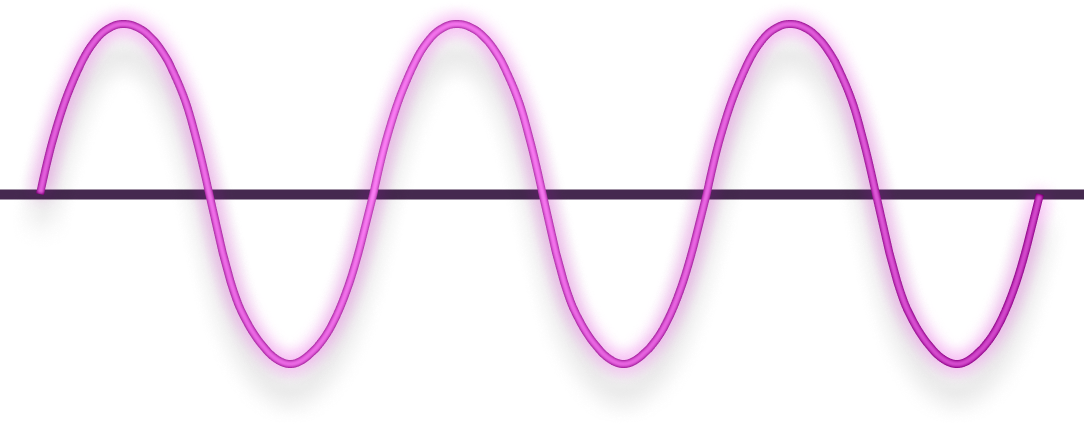
The sine wave is nature's original waveform, characterised by rounded, smooth edges. It's often shortened to "sin" in synth interfaces.
Saw

The sawtooth, or "saw" wave has more 'presence' than a sine wave. It works well when layered with another saw wave of a similar frequency.
Square
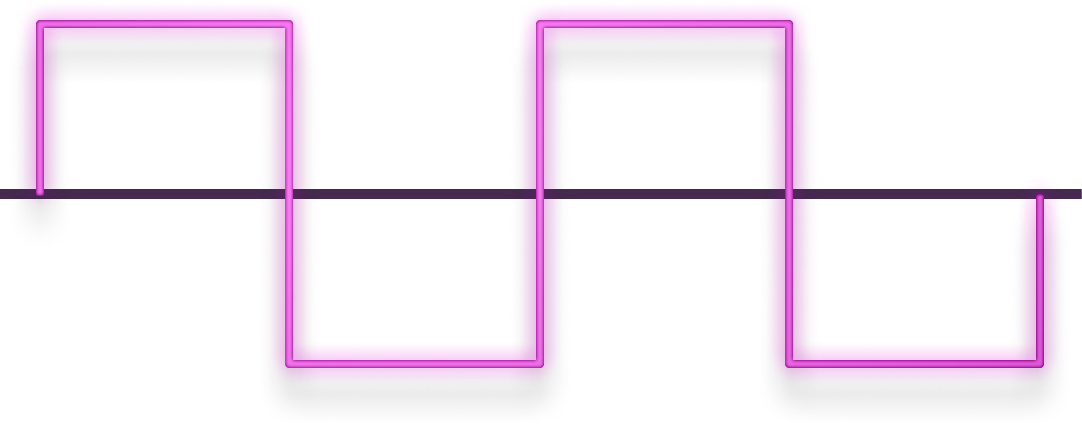
The square wave is a popular choice for bassline synthesis. It often has a resonant low pass filter applied to create a classic garage sound.
Triangle

Similar in tone to a sine wave, but with more artifice, the triangle wave is often layered with other waveforms to build interesting timbres.